Loan Programs
FHA Loans Explained: The Truth for First-Time Buyers
 Brad Brondt · NMLS #242550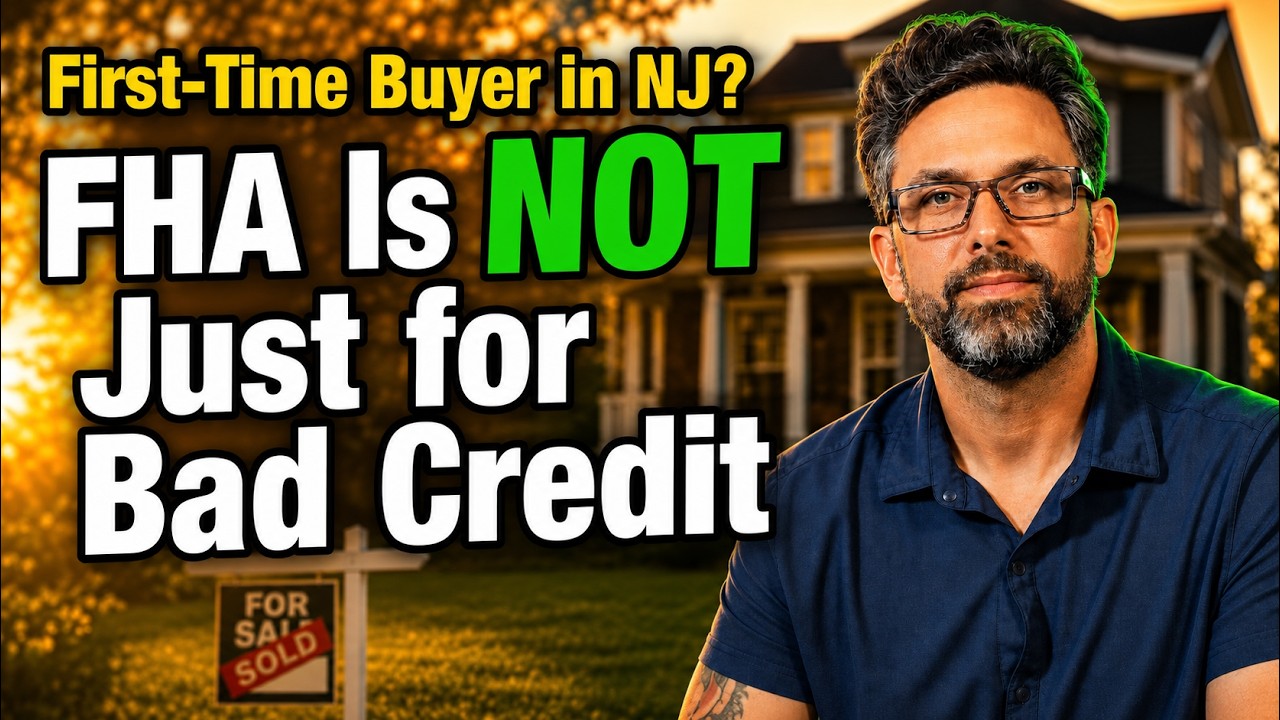
What is an FHA loan and who is it actually for?
An FHA loan is a mortgage insured by the Federal Housing Administration that lets lenders approve buyers with imperfect credit and small down payments. It is built for first-time buyers, not just people with bad credit. With a 580 score you can put down as low as 3.5%, gift funds are allowed, and New Jersey buyers can pair it with forgivable state assistance.
An FHA loan is a mortgage insured by the Federal Housing Administration, part of the U.S. government. The lender funds the loan, and the government insures it against default. That backing lets lenders approve buyers with imperfect credit and smaller down payments. It is built for first-time buyers, not just people with bad credit. With a 580 score you can put down as low as 3.5%, gift funds are allowed, and in New Jersey you can stack forgivable assistance on top.
Here is something that surprises people. The FHA loan, the one everyone talks about like it is the consolation prize for wrecked credit, was the single most popular loan first-time buyers used last year. In 2025, more than 8 out of 10 FHA purchase loans went to first-time buyers, and FHA's market kept growing for the fourth year straight. If you have been thinking FHA means "I have bad credit and no other options," drop that belief now. It is wrong, and that wrong belief is costing real buyers in Burlington and Camden County the house they could be buying this year.
What is an FHA loan, in plain English?
The simple version: it is a mortgage backed by the Federal Housing Administration, a government agency. The government does not hand you the money. The lender does. But the government insures the loan, so if a borrower defaults, the lender is protected. Because the lender is protected, a lender can say yes to people a conventional loan would turn down.
That insurance is the whole engine. It is the reason FHA can be more flexible on your credit and your debt than a standard bank loan.
Are FHA loans only for people with bad credit?
No. This is where the myth comes from, and it is only half true. FHA does let you in with a lower credit score than conventional financing. The technical floor is a 500 score. But if your score sits between 500 and 579, you are putting 10% down, which kills the low-down-payment appeal.
The number that actually matters for most buyers is 580. Hit a 580 and your down payment drops to 3.5% of the purchase price. That is the headline. That is why people use this loan.
Real talk though, a 580 is not where most approvals land. Many FHA lenders set their own minimum higher than the government floor, often in the low-to-mid 600s, because a stronger score gets you a better deal. So when someone says "FHA is for bad credit," the truth is FHA is forgiving of imperfect credit. Big difference. You do not need to be a credit disaster to use it. You just need it to not be perfect, which describes basically every normal first-time buyer.
How much money do I actually need to put down?
With a 580 score, you are looking at 3.5% down. On a home near the FHA limit for our area, that is real money. But here is the part people miss: it does not all have to come from your own savings.
FHA allows gift funds. If a parent or family member wants to help, they can hand you the down payment, as long as it is documented with a simple gift letter. That letter shows their information, the amount, and a line stating you do not have to pay it back.
Plenty of buyers walk in convinced they are two years away from being ready. Once a family gift gets counted, they are ready that month. The down payment is often a smaller wall than you think.
How does FHA mortgage insurance really work?
This is the part nobody wants to explain, because it is the real cost. On an FHA loan there are two pieces of mortgage insurance.
There is an upfront premium of 1.75% of the loan amount, which usually gets rolled into the loan so you are not writing a separate check. Then there is an annual premium baked into your monthly payment.
Here is the catch most people do not hear until it is too late. If you put down less than 10%, that monthly insurance stays for the life of the loan. It does not fall off when you hit a magic equity number like conventional PMI does. The Consumer Financial Protection Bureau explains how mortgage insurance differs across loan types.
That is not a reason to avoid FHA. It is a reason to plan. For many buyers, getting in the door now with a small down payment and refinancing out of FHA later, once equity and credit grow, is a smart play. But that is a "run your specific numbers" conversation, not a guess.
What debt-to-income ratio do you need for FHA?
Do you know your debt-to-income ratio right now? It is one of the numbers that decides this. DTI is your monthly debts divided by your monthly income, the percentage of your paycheck already spoken for.
FHA likes to see that around 43% or lower. But FHA will stretch higher with what we call compensating factors. That is shorthand for reasons to trust you anyway: solid savings in the bank, a clean record of paying rent on time, or a long steady job.
Buyers get approved over the 43% line all the time when the right strengths are documented. An online calculator will never do that for you. That is a human reading your full picture and knowing which strengths to put forward.
Does the house itself have to qualify?
Yes. FHA cares about the property, not just you. The home has to be your primary residence, somewhere you actually live, not a rental or a flip. It also has to pass an FHA appraisal that checks the place is safe, sound, and structurally fine.
A fixer-upper with a caving roof might get flagged. For most normal homes in our market that is a non-issue, but it is exactly why you want to know the rules before you fall in love with a listing.
How do New Jersey buyers stack assistance on top of FHA?
This is the part that gives New Jersey buyers an edge most never use. You can take that FHA loan and stack a state program on top of it.
The New Jersey Housing and Mortgage Finance Agency, or NJHMFA, runs a down payment assistance program. As a first-time buyer you can get help toward your down payment and closing costs, with the exact amount depending on which county you are buying in. The assistance comes as a five-year forgivable second loan. Zero interest, no monthly payment, and if you live in the home for five years, it is forgiven. You do not pay it back.
Remember how FHA needs that 3.5%? This assistance can cover it. Picture a first-time buyer in Camden County with steady income and a decent score but barely any savings. On paper they feel locked out. Stack FHA with NJHMFA assistance and the cash needed at the table mostly came from the program, not their bank account. That is the difference between someday and this year.
There is another layer too. If you are a first-generation homebuyer, meaning your parents never owned a home, or you came up through foster care in New Jersey, the state adds an extra chunk of assistance on top of the regular amount. Same deal, forgivable, no monthly payment. Most of the people it is built for have no idea it exists.
One honest note: the county assistance amounts, income limits, and purchase price caps vary by county and household size, and they change during the year. There is also an order of operations. The assistance has to pair with a qualifying first mortgage, and you have a homebuyer education class to complete. Missing a step is how people accidentally disqualify themselves from free money. That is the reason to work with someone who runs these every day.
Where does this leave you?
FHA is not the bad-credit loan. It is the flexible first-time-buyer loan. It works with imperfect credit and a small down payment, the down payment can come from a gift, the mortgage insurance is a real cost you plan around, and here in New Jersey you can stack thousands in forgivable assistance on top of it.
That is the map. But the map is not the answer. Your numbers are the answer. If you are anywhere in South Jersey, Burlington County, Camden County, or the Philadelphia suburbs and you want to know what you actually qualify for, start your application or reach out here to get real answers on your real situation.
Frequently asked questions
Is an FHA loan only for people with bad credit? +
No. That is the most common myth. FHA is forgiving of imperfect credit, which is different from bad credit. The technical score floor is 500, but a 580 score is what unlocks the 3.5% down payment most buyers want. Many lenders set their own minimums higher, often in the low-to-mid 600s, because a stronger score earns a better deal. In reality, FHA is the most popular loan for first-time buyers, with more than 8 out of 10 FHA purchase loans going to them in 2025.
How much do I need for an FHA down payment? +
With a 580 credit score, the minimum down payment is 3.5% of the purchase price. If your score falls between 500 and 579, the requirement jumps to 10%. The key thing many buyers do not realize is that the money does not all have to come from your own savings. FHA allows gift funds from family, documented with a simple gift letter that confirms you do not have to repay it. That alone makes many buyers ready sooner than they expected.
Does FHA mortgage insurance ever go away? +
It depends on your down payment. FHA has an upfront premium of 1.75% of the loan amount, usually rolled into the loan, plus an annual premium in your monthly payment. If you put down less than 10%, the monthly insurance stays for the life of the loan. It does not drop off at an equity threshold the way conventional PMI can. Many buyers plan to refinance out of FHA later once their equity and credit grow, but that depends on your specific numbers.
What debt-to-income ratio do I need for an FHA loan? +
FHA generally likes to see a debt-to-income ratio around 43% or lower. DTI is your monthly debts divided by your monthly income. The good news is FHA can stretch higher with compensating factors, which are documented strengths like solid savings, a clean rent payment history, or a long steady job. Buyers get approved above the 43% line regularly when those strengths are presented correctly, something an online calculator cannot do for you.
Can I combine FHA with New Jersey down payment assistance? +
Yes. The New Jersey Housing and Mortgage Finance Agency, NJHMFA, offers down payment assistance you can pair with an FHA loan. It comes as a five-year forgivable second loan with zero interest and no monthly payment. Live in the home for five years and it is forgiven. The amount varies by county. First-generation homebuyers and those who came up through foster care may qualify for extra assistance. You must use a qualifying first mortgage and complete a homebuyer education class.
What kind of home can I buy with an FHA loan? +
The home must be your primary residence, meaning a place you actually live, not a rental or a flip. It also has to pass an FHA appraisal that confirms the property is safe, sound, and structurally fine. A severe fixer-upper with major issues like a caving roof can get flagged. For most standard homes in the South Jersey market this is not a problem, but it is worth knowing the rules before you fall in love with a listing.
Sources
- Let FHA Loans Help You — U.S. Department of Housing and Urban Development
- Consumer Financial Protection Bureau — Consumer Financial Protection Bureau

About the author
Brad Brondt — Branch Manager
NMLS #242550
Brad Brondt is a mortgage loan officer and branch manager at Acre Mortgage & Financial, Inc., where he leads The Brondt Cook Group (NMLS #13988) alongside business partner Craig Cook. Brad focuses on helping homebuyers and homeowners across South Jersey and the greater Philadelphia suburbs navigate the mortgage process with clarity and confidence. With over 15 years in the mortgage industry, Brad specializes in building systems and strategies that make home financing simpler for his clients and referral partners. When he's not writing about mortgages or working with clients, you can find him spending time with his family or snowboarding.
Ready to talk numbers?
Schedule a 15-minute call. We'll walk through your situation and show you what's actually possible — no pressure, no pitch.
Book a call

